Employment Law
EPF Withdrawal and Claim Problems: A Guide for Employees in India
By ATTPL Legal Editorial Team · · 2 min read
How employees can check their provident fund account, complete KYC, file an online claim, and what to do when an EPF claim is rejected or delayed, including the EPFO grievance portal and the legal options.
What the EPF is and why it matters
The Employees' Provident Fund is a retirement savings scheme run by the Employees' Provident Fund Organisation (EPFO). Both employee and employer contribute from salary. For many people it is their largest long-term saving, so a problem with the account can be very stressful.
Each member has a Universal Account Number (UAN), which stays the same across jobs. Keeping the UAN active and correct is the key to smooth claims.
Get your account ready
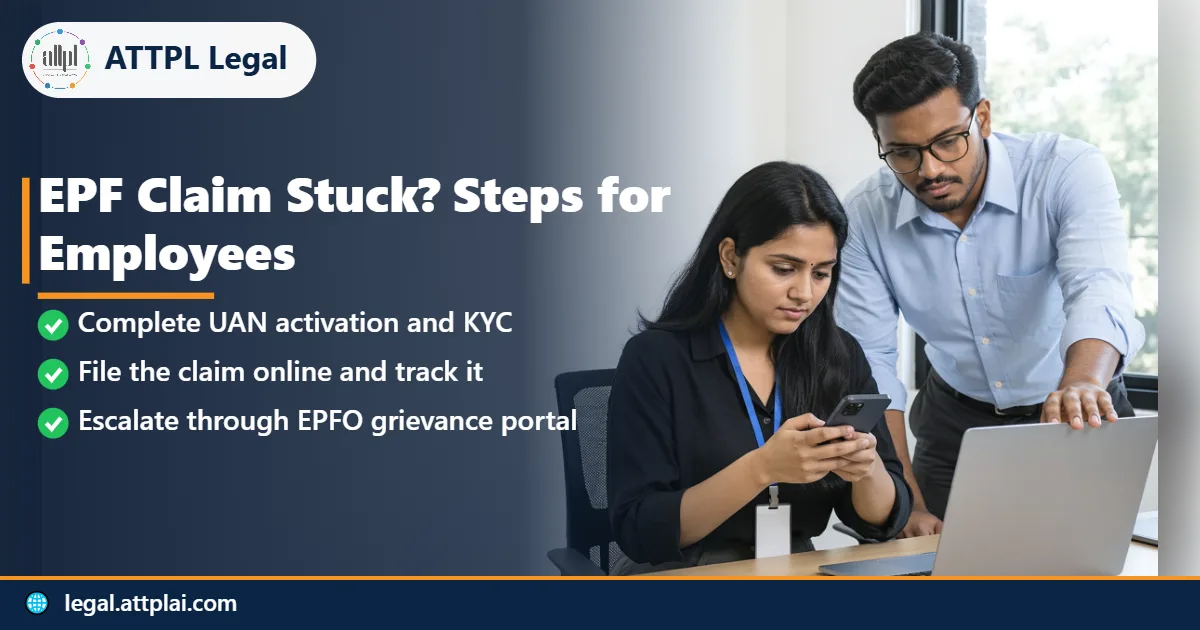
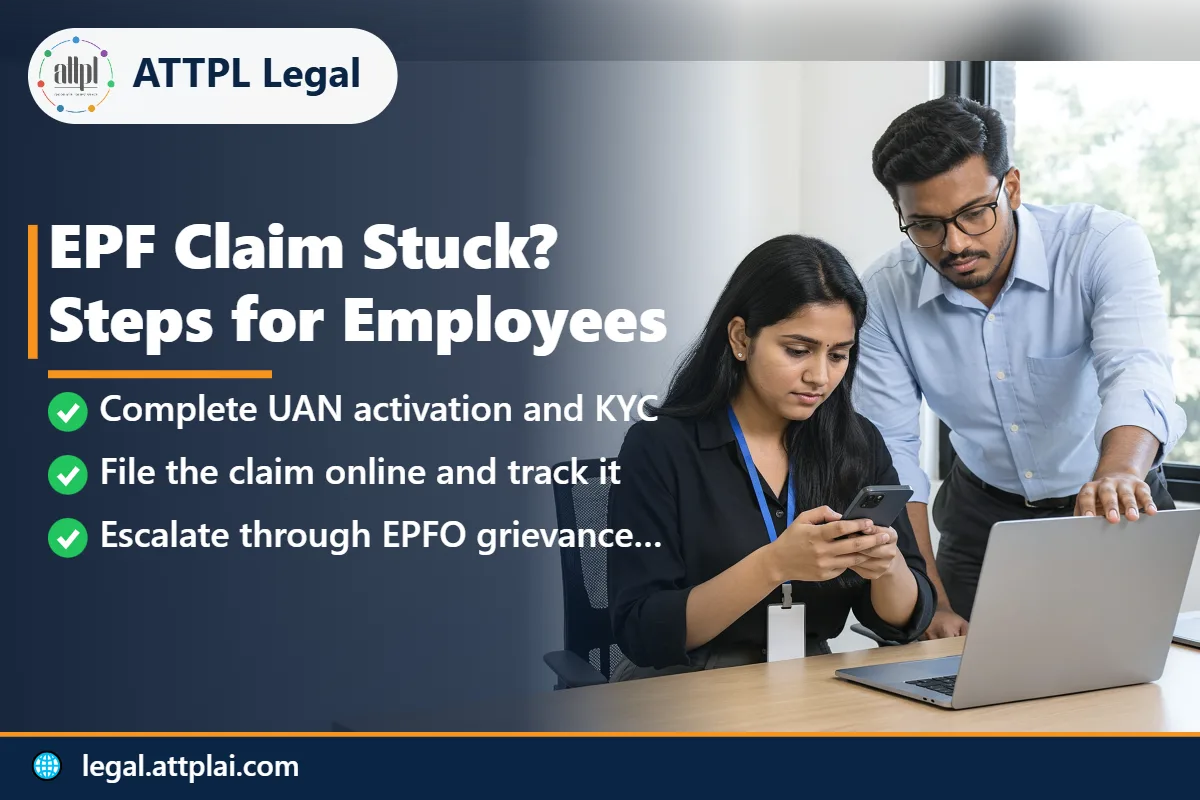
- Activate your UAN on the EPFO member portal using your registered mobile number
- Complete KYC: link Aadhaar, PAN and bank account details, and make sure the name and date of birth match across all records
- Ask your employer to approve the KYC details where required
- Check your passbook to confirm that contributions are being deposited every month
- Record the date of exit in your account when you leave a job, and ask your employer to update it
Filing a claim
Most claims, such as withdrawal, final settlement, pension withdrawal and transfer, can be filed online through the member portal using your UAN. The rules on when and how much you can withdraw are updated from time to time, so check the current rules on the EPFO portal before applying.
- Log in with your UAN and password, and open the online claim section
- Check your KYC and bank details, and choose the correct type of claim
- Verify with the OTP sent to your Aadhaar-linked mobile number
- Note the claim number and track the status online
Why claims are rejected
- Name, date of birth or gender mismatch between EPFO, Aadhaar and bank records
- Bank account details not verified or an incorrect IFSC
- Date of exit not updated by the employer
- Employer has not deposited contributions or has not filed returns
- Multiple UANs for the same person that have not been merged
Read the rejection reason shown on the portal. Most reasons can be fixed by correcting the record and filing the claim again.
If your employer has not paid your PF
An employer must deposit both contributions on time. If deposits are missing or short, collect your salary slips and bank statements, write to the employer's HR and accounts team, and then complain to the EPFO office through the grievance portal. The EPFO can inspect the employer and recover dues. See also our guide on recovering unpaid salary, and on gratuity claims.
Escalating a grievance
- File a complaint on the EPFO grievance portal and note the registration number
- Follow up with the regional EPFO office in person, with printouts of your documents
- Use the central public grievance portal if the issue continues
- If you still do not get relief, speak to a lawyer about further remedies. Our guide to filing an RTI may help to obtain information about your case
Frequently asked questions
Can I withdraw my full PF when I change jobs?
Rules on withdrawal and transfer depend on your service and employment status, and they change from time to time. Check the latest rules on the EPFO portal.
Do I need my employer's help to file a claim?
For many online claims no, if your KYC is verified. Some cases, such as an exit date not updated, need the employer's action.
How can I track my claim?
Log in to the member portal with your UAN and use the track claim status option. You can also use the EPFO mobile app.
Sources and further reading
This article is general information and is not legal advice. EPF rules, forms and limits change, so check the EPFO portal or consult a qualified lawyer for your specific case.