Property Law
Property Mutation (Namantaran) in Rajasthan: Guide
By ATTPL Legal Editorial Team · · 4 min read
How mutation or namantaran of land and property records works in Rajasthan after a sale or inheritance: patwari, tehsil, documents and common objections.

What Property Mutation or Namantaran Means
Buying land or inheriting family property is only half the job. Until the change of ownership is recorded in the revenue records, the old owner's name continues to appear, which can create problems when you sell, take a loan, apply for a government scheme or defend a dispute. In Rajasthan, this updating of records is called mutation or namantaran. This guide explains when mutation is needed, how the patwari and tehsil process generally works, the documents involved and how to handle objections, for both agricultural land and urban property.
Mutation is the entry of a change in ownership in the revenue or municipal records. For agricultural land in Rajasthan, it is recorded in the land records maintained under the Rajasthan Land Revenue Act, 1956, and reflected in the jamabandi. For urban plots and houses, the corresponding entry is usually made with the local body or development authority.
Mutation is important for record-keeping, but it does not by itself create title. Ownership comes from the registered sale deed, a valid will, succession or a court decree. Mutation simply records that change.
When You Need Mutation in Rajasthan
- After purchase through a registered sale deed
- After inheritance on the death of the recorded owner (succession mutation)
- After a gift deed, partition or family settlement
- After a court decree affecting ownership
- When a mortgage or its release has to be noted, where applicable
Farmers relying on land records for credit and schemes should keep entries current. This kisan guide covers how farmers can use such schemes, and applications such as agriculture solar pumps and plants usually ask for up-to-date land documents.
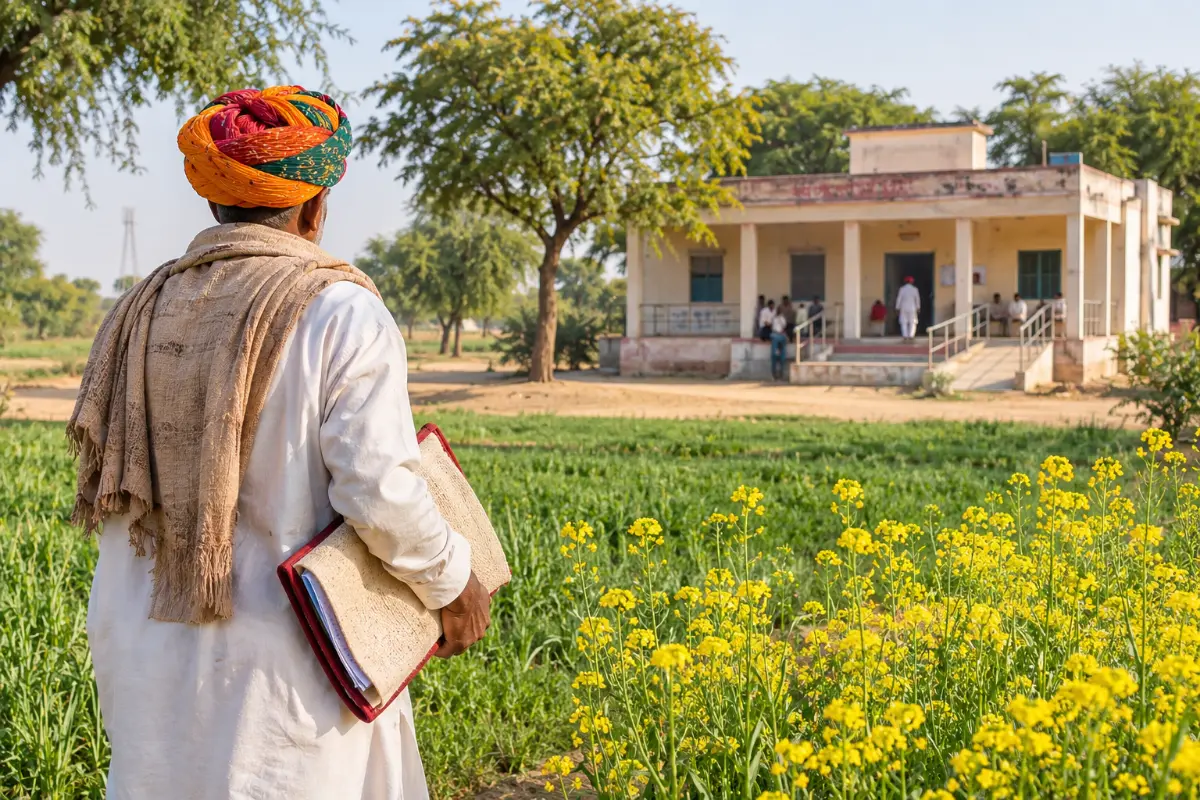
Mutation Process for Agricultural Land
The process is broadly as follows, though steps and online options change, so check the current procedure at your tehsil:
- Apply for mutation with the patwari or tehsil office, or through the state's online land records services such as Apna Khata or e-Dharti where available
- The patwari verifies the documents and records a report
- A public notice is issued so that anyone with an objection can raise it within the stated period
- If no valid objection is received, the competent revenue officer approves the mutation
- The jamabandi is updated and you can obtain a certified copy
After registration of a sale deed, information may flow from the sub-registrar to the revenue office in some cases, but buyers should still follow up and confirm the entry.
Documents Commonly Required
- Application form and identity proof of the applicant
- Registered sale deed, gift deed or partition deed, as applicable
- For inheritance: death certificate, details of legal heirs and, where required, succession certificate or will
- Latest copy of jamabandi and khasra details
- Affidavit or declarations as asked by the office
Names and khasra numbers must match across documents. Spelling differences are a frequent reason for delays.
In succession cases, list all legal heirs honestly. Leaving out a sibling or other heir to speed things up usually leads to objections, and can create a much bigger dispute later. Where heirs agree that one of them will hold the land, a properly documented release or family settlement is safer than an informal understanding.
Urban Property Mutation
For houses and plots in cities like Jaipur, the change of name is typically done with the municipal corporation, development authority or housing board that holds the property record. Requirements differ by authority and scheme, and may include no-dues certificates and property tax payment.
Updated records matter when you raise funds. Lenders offering a loan against property usually check that the borrower's name appears in the latest records.
Handling Objections and Disputes in Mutation
Objections are common in inheritance cases where some heirs are not included, or where there is a dispute over a sale. The revenue officer will hear the parties and decide the mutation; orders can generally be challenged before higher revenue authorities within the time allowed.
Since mutation does not decide title, serious ownership disputes may need a civil suit. A careful property due diligence on title and RERA before purchase reduces such risks, and litigation services help where a dispute has already started.
How ATTPL Legal Can Help
ATTPL Legal can review your documents, prepare mutation applications and affidavits, follow up with revenue offices and represent you in objections or appeals through our property legal services. To discuss your matter, contact ATTPL Legal.
Key takeaway: Mutation records a change of ownership but does not create title; apply promptly after a sale or inheritance, keep documents consistent and follow up until the jamabandi is updated.
Frequently asked questions
Does mutation prove that I own the land?
No. Mutation is a revenue record entry. Title comes from documents like a registered sale deed, a valid will or a court decree.
Is there a time limit to apply for mutation after purchase?
You should apply promptly. Delays can cause practical problems; check current requirements with the tehsil office.
Can a mutation order be challenged?
Generally yes, through appeal or revision before higher revenue authorities within the limitation period, or through civil proceedings on title.
Sources and further reading
This article is general information only and is not legal advice. Laws, procedures, fees and portal processes change and depend on the facts of each case; please check the current rules with the relevant authority and consult a qualified advocate before acting.