Consumer Rights
Loan Recovery Agents and Harassment: Your Rights as a Borrower in India
By ATTPL Legal Editorial Team · · 2 min read
What lenders and recovery agents may and may not do when you miss a loan payment in India, how to respond to calls and visits, and how to complain to the lender, the RBI ombudsman and the police.
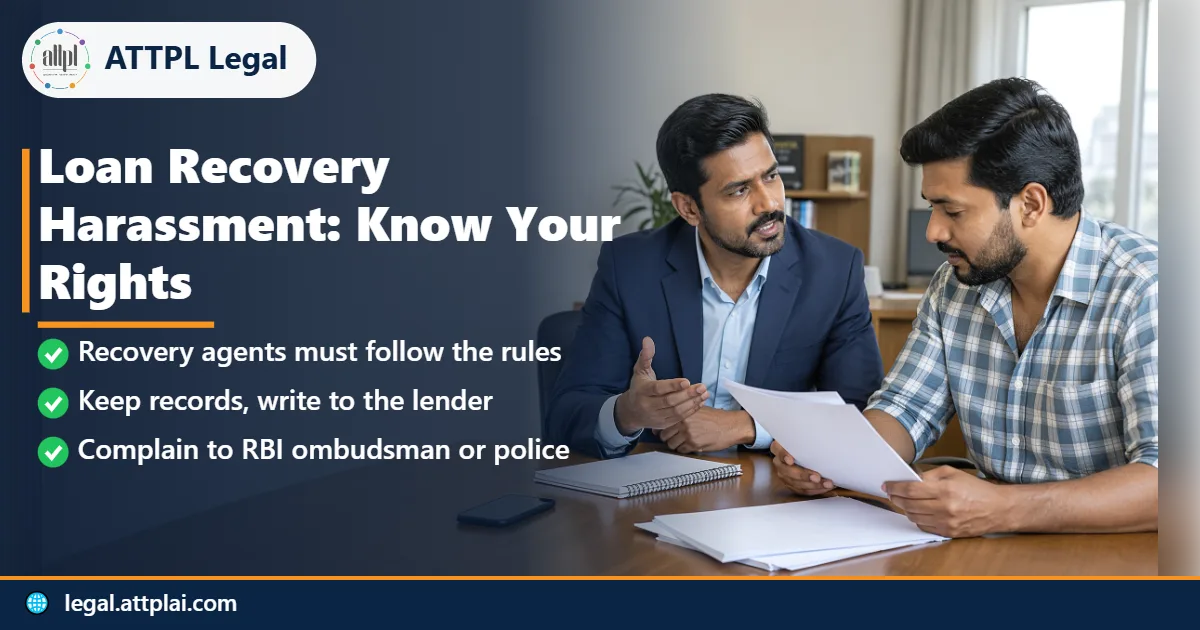
Missing a payment does not remove your rights
A missed instalment can cause stress, but a borrower still has legal rights. Banks and non-banking finance companies must follow the Reserve Bank of India's rules and fair practice norms when they recover dues. Threats, abuse and public shaming are not allowed.
Knowing what a lender may do helps you stay calm and respond in the right way.
What lenders and agents should do
- Recovery agents should identify themselves and the lender they represent, and carry proper authorisation
- They should contact you only at reasonable hours, generally between morning and evening, and not repeatedly or late at night
- They must not use abusive or threatening language, or use force
- They must not call your relatives, employer or neighbours in order to shame you into paying
- The lender must give you a clear statement of the outstanding amount, and a written notice before taking legal steps
- Lenders must have a grievance officer and a procedure to handle complaints
What you should do
- Do not ignore the lender. Contact the bank or company in writing and explain your situation honestly
- Ask for options such as restructuring, a longer tenure or a settlement, and get any agreement in writing
- Keep a record of calls and messages, with dates and times. Save screenshots and recordings where lawful
- Do not pay anyone in cash or to a personal account. Pay only to the lender's official account and keep receipts
- Do not sign blank papers or new documents without reading them
If the issue is a delay in recovering your own dues instead, see our guides on debt recovery through a summary suit and legal notices.
How to complain
- Write to the lender's grievance officer, giving details of the harassment, and ask for a written reply
- If you do not get a reply within the time stated by the lender or by RBI rules, or you are not satisfied, complain to the RBI Integrated Ombudsman through the official complaint portal
- Report threats, abuse or physical harm to the police and, if they do not act, follow the steps in our guide to filing an FIR when the police refuse
- For fraud or blackmail through digital loan apps, use the steps in our guide to reporting cyber fraud
Be careful with loan apps
Borrow only from regulated banks and finance companies, and check an app's lender details before you install it. Some illegal apps access your contacts and photos and use them to threaten borrowers. Do not give permissions that are not needed, and report such apps to the authorities.
When legal help is useful
If the lender starts legal proceedings, or you receive a court or tribunal notice, take advice from a lawyer straight away. A good lawyer can explain your options. Read our checklist on how to hire a lawyer in India.
Frequently asked questions
Can a recovery agent come to my home?
Lenders may visit, but they must behave politely, at reasonable hours, and not threaten or shame you. Note the details and complain if the rules are broken.
Can the lender call my family and friends?
They should not harass or shame you in front of others. Disclosing your debt to third parties in order to pressure you is not acceptable.
Is it a crime to miss a loan payment?
A missed loan payment is generally a civil matter, though cheque bounce and fraud can involve criminal law. Take legal advice for your situation.
Sources and further reading
This article is general information and is not legal advice. Rules can change, so consult a qualified lawyer about your specific loan and situation.